Thursday, November 1, 2018

Enzymes and Hospitality


I confess: I’m a small science nerd. I’m not one to read books about the subject but I do love watching biological processes at work and taking note of the way the laws of physics govern our world.

My love and fascination for enzymes, especially, has not faded. Enzymes are catalysts that expedite chemical reactions. When atoms combine to form new molecules, often enzymes are the workhorses making that it happen. The enzymes are not a part of the new molecule, but they bring the elements together and make them happier. Nature provides a facilitator to move things along and bring things together that otherwise may not have bumped up against each other.

Enzymes create an active site for two substrates to connect. The enzyme brings these substrates together until they can meld into a new product. The new product releases from the enzyme, allowing the enzyme to reset its active site and prepare for new substrates. Isn’t that beautiful?

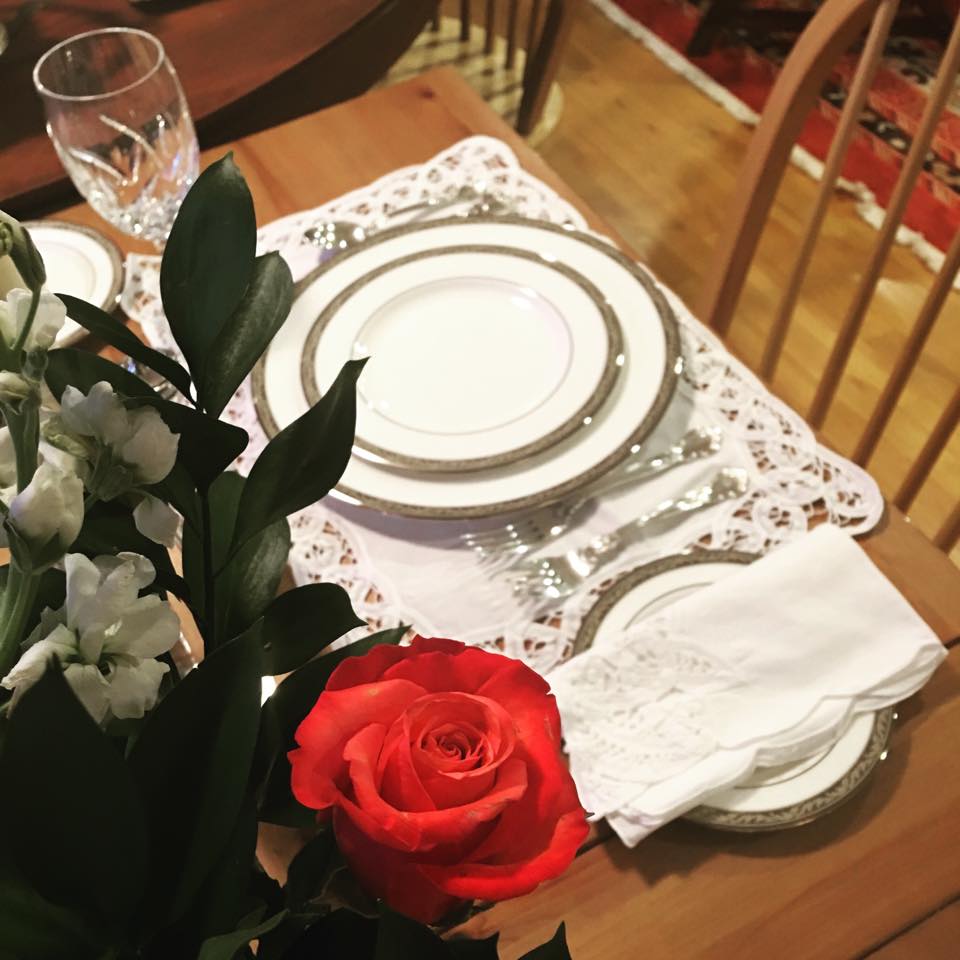
When we engage in the ministry of hospitality, we do the work of an enzyme. We set a table, dress up our lawn, arrange plates and napkins, and prepare food. We make ready our active site. Then our guests, our substrates, arrive. Some of the guests know each other and share a bond already but others will be meeting for the first time. They will introduce themselves, get to know each other, and form a new bond. By the time they leave, these substrates are in relationship with one another and we, the hosts and catalysts, can clean and reset the active site for another meeting.

Case in point: Recently we had a group of people to our house to celebrate our son’s birthday and mark Oktoberfest. There were people from four different parts of our lives in attendance. Once all of our guests had arrived and dinner was served, I walked around to watch and listen. On the deck, a family new to the area visited with school families and church members, learning why we all love Rabun Gap and Saint James. On the lawn, the parent of a kindergartener visited with a fifth-grade teacher. The parent called me over and said, “My new BFF!” wrapping her arm around the teacher. “We had the same nickname growing up! We’re just finding out what else we have in common.”

Yesterday, I happened to be on Facebook and saw a friend of ours of fifteen years comment on the post of another friend of twenty-two years. The two people live in different parts of the country and would not know each other were it not for our wedding thirteen years ago. Now, they are friends.

Enzymatic activity at work.

I feel the same way about being a priest, especially around the altar. So much of my job is connecting people so that ministry can grow out of their new relationship, organically and dynamically. I hear someone shares an interest that matches another person’s resources and my job is to bring them together to talk and see if a new product might result from our efforts. Similarly, I set the table on Sunday morning for the congregation to gather around and be fed by God. The action of gathering at the altar creates a new product: the body of Christ. I’m not the host, simply the catalyst. And I love this work.

I sometimes hear people either degrade themselves or one another around the art of hospitality. Some people say they couldn’t host people to their houses because they aren’t perfect and can’t create the “perfect” environment. Similarly, people will criticize someone for hosting parties because they want to “show off” their fashionable houses and perfect abilities to pull off a gathering.

These thoughts are wrong and, in the process, we are discouraging one another from performing one of the most fundamental ministries there is. Welcoming each other through acts of hospitality is a primary ministry that gives birth to many more. I don’t delight in having people into my home because I get to show it off. To the contrary, I don’t make extra efforts to have everything looking perfect or even tidy. I simply love seeing people meet, laugh, connect, eat well, and leave happier than when they came and with new bonds and relationships.

In an age of isolation and alienation, could we not do with some more enzymes? Do we not need more catalysts for bringing people together rather than fewer? To that end, I encourage you, brothers and sisters, to consider the ministry of hospitality. Consider creating active sites where new products might be formed. We hunger for connection and relationship, renewal and purpose. This does not happen if we do not first get people together. Won’t you partner with me, then, in some enzymatic activity?

Holiday Imperfection


I shared this on social media on October 30 and got lots of giggles, so I thought I'd share it here. Enjoy!


Typical and expected wording for social media post:
Yay! 48 monster pops made and cooling for the kids’ Halloween parties tomorrow!
Now for the realness:
1. I bought the rice crispy treats pre-made and we just decorated them.
2. I was reminded why I am a cook and not a pastry chef or candy maker. I HATE working with candy and candy melts.
3. I was also reminded why I generally kick everyone out of my kitchen when I’m cooking. This is the “Prayerful Kitchen” because cooking is a prayerful and meditative process of me. That said, God blessed me with three hyper-verbal children. Do you know how meditative cooking is with a 10-year-old talking the entire time? It’s not. Not in the slightest. I had to tell her that if she kept talking incessantly, I would have to kick her out if my kitchen.
As you look at all the perfect holiday pictures from now through New Years, remember most of them have a back story. You’re not seeing the temper tantrums, the relatives who aren’t on speaking terms, the burnt cake, the dropped turkey, and you certainly aren’t hearing the constant thread of curse words pouring through most everyone’s heads.
Friends, you got this. You don’t have to “do all the things.” Do what feeds you. Do what excites you. Do what fulfills you and your people. Don’t try to do it perfectly and don’t pretend that you did it perfectly.
Sending everyone love and light as we hop on the holiday train!

Wednesday, October 24, 2018

Fog and the Mountain


The fog crawls up the mountain
Digging its tendrils deep between the trees
Hugging their leaves and licking their branches

As the fog reaches the mountain’s pinnacle
Wind rips it away from its lover
Never to meet again

The fog dissipates in feathers and wisps
Into tears of contentment
Satisfied by its one great union

Monday, October 22, 2018

Confusing King

A new king comes to power and immediately abolishes the old taxation system. The subjects wait with great anxiety to hear what will replace the system they have known. Past kings have demanded the subjects pay different percentages of their income and harvests every year. The people of the kingdom know punishment certainly awaits anyone who fails to comply with the king’s orders. Not knowing the expectations of the new king causes great consternation and gnashing of teeth across the kingdom.


The traditional day of taxation arrives but the new king still has not announced his demands. The people line up outside the castle with goods representing the ten percent tax rate required by the previous ruler. They wait and wait for the gates to open and the king to step forward, but nothing happens. After a full day of standing in line, the people become restless and even more worried. Finally, the king looks down from a balcony on the side of the castle and repeats his announcement that the old taxation system has been abolished. The people stay where they stand, waiting to hear how the king likely will increase the former rate and what day they will be expected to render such taxes. Instead, the king waves and tells them all to go home and back to their fields before he turns and goes back into the castle.


Over the next several months, the king walks through the fields and visits his subjects in their homes. No king has ever done such a thing. Kings don’t spend time with their subjects and certainly do not visit them in their fields where they work. The people assume the king spends time among them to see for himself how much they harvest or how much they make. Maybe the king does not trust his subjects to give him the full tax amount demanded. If he walks among them, he will have a better sense how much his people will owe him so as to guard against the subjects not giving their full amount.


The king’s presence among them makes them nervous and resentful, so they begin to inquire about the king’s desires and purpose in visiting with them in their fields. The king simply says that he likes to see their hard work and how they find fulfillment in the work they do. He wants to know their families and understand how he might better serve them as their ruler. He cares about his subjects and wants to provide for them the best way he possibly can.


Out of utter confusion and frustration, the subjects continue to fill the void of demands and expectations by coming up with their own. They tell one another stories of terrible punishment that is to come if they do not pay the king tremendous tributes of money and harvest yields. A rumor goes around that the king is building a massive dungeon under the castle where subjects will be thrown for decades if they fail to pay 40, 50, 60, even 90% of their harvest to him.


Once again, the subjects line up outside the castle on their customary tax day, this time with even greater offerings for payment. They grumble and complain that the king would demand so much of them, even their full livelihood. They fuss as they wait for the king to appear to take their taxes or throw them in the dungeon for failure of payment. The citizens begin looking at one another, comparing their offerings with others, worried they might not have brought enough because their neighbor seems to have brought twice what they have. They worry and argue among themselves.


Once again, the king comes out on the balcony, reminds them of his previous announcement, and tries to send them home. But many of his subjects stay where they stand. The next morning, he finds several of them have chained themselves to the walls of the castle. Some among them have told the rest that the king is angry because they did not bring enough on tax day and that is why he sent them away. These leaders have convinced people that the king soon will come to enslave them for their failures and the only way to gain favor and some forgiveness is by chaining themselves before the king does. He will favor them for realizing their wretchedness and locking themselves up.


The king comes out, breaks the chains, and sends them home once again.


The following year, on tax day, the people show up at the doors of the castle. This time, some have brought 1%, some 6%, others as much as 50% of their year’s earnings. No one is grumbling and no one is judging their offering against their neighbor’s. The king steps out on the balcony to ask why they have come since they no longer are bound to any tax system. The people tell him they have not brought taxes, but offerings of thanksgiving. They have come to understand the king. The day after he walks in their fields with them, he has supplies sent specific to the needs he has witnessed among them. If a farmer has a broken fence, he sends other farmers to help with fresh fencing supplies. If a family has lost their livelihood because their milk cow was killed by a wolf, he sends another milk cow. The people have come to show their gratitude for the king’s faithfulness to them, not because they have to, but because they want to. Life now is infinitely better than it ever has been before and they want the king to understand how thankful they are for his generosity, care, and kindness.


The king does not judge their gifts, assessing if they are adequate. Instead, he accepts their offerings, saying each one is enough. Before he brings the goods into the castle storerooms, he has his subjects consider who in the kingdom might have need of their offerings. If they know someone who needs what they have, he tells them to first take their offering to their neighbor, then bring it to him. What remains, the king stores and uses when he sees a subject in need.


I imagine this to be God’s experience in watching humanity. Patiently, God watches as we try to twist and redefine grace, unable to accept it as unbounded and infinite. We expect a certain economy, one that demands tit for tat based on bartering and exchange. We try to make God live by human rules of commerce by telling ourselves and one another that we must earn God’s grace and love or that we have received it and now are indebted to God to a crushing degree.


God wants a response from our heart of gratitude and love. We keep trying to make our offering compulsory. We cannot believe God would love us unconditionally and pour her grace upon us with abundance. We make new rules and spread misconceptions because we cannot accept such an immense gift. Meanwhile, God waits and watches, wanting us not on our knees but with arms open, ready and willing to return even a small fraction of the love she already has given.


To live in such love and grace is true freedom. Were God to require specific offerings or demand certain acts of contrition, then we would bound in chains. The minute something is compulsory is the minute we lose our freedom. But a gift, an offering, an act of love can only be given if it comes voluntarily and from the heart out of a pure desire to show appreciation.

The day we allow ourselves one another freedom, the day we all bring our offerings out of unbounded thanksgiving and love, is the day the kingdom of God will be made real.

Tuesday, October 2, 2018

On Bumper Cars and Spiders


I watch as the red car with lightning bolts heads straight for the yellow car painted with the words “crash!” and “pow!” The drivers look devilishly at one another, pushing their little cars as fast as they will go, straight for one another. The drivers burst into laughter as the thick rubber bumpers around their cars make contact and jolt the cars apart. Only space exists between the cars where, for a split second, they became one mass of metal and rubber.  The drivers, still laughing, turn their attention to other cars and other drivers. A socially-acceptable maniacal obsession overtakes them as they plunge themselves once again into the fray.

We place a high premium on rugged individualism in the United States. We prize gumption and exalt people who seem to conquer life all by themselves. We crave stories of survivors who have managed to escape the worst of situations with little more than their bare hands. I chalk it up to the pride we have in our history of carving a great nation out of a wild and untamed land. I, too, want to know that I could take care of myself if placed in a truly arduous situation. It’s the reason I like to learn new skills.

Our hyper-focus on the individual leads us past the desired sense of self-sufficiency and into the realm of alienation and isolation. In our minds, we become too accustomed to thinking of ourselves as autonomous. We draw thick lines around ourselves imagining that these lines will guard us. We pretend these lines will serve as bumpers, allowing us to bounce off other people unscathed and safe. They will protect us from being tainted by the wrong ideals and impurities of those with whom we come in contact.

Despite what our shared culture delusion would have us believe, we do not simply bounce off one another to find emptiness between us as it was before we met. There are no lines. There are no bumpers. We reinforce this delusion by lauding people whom we perceive as having “thick skin.” We marvel at individuals who seem to bounce off of the worst of life with nary a scratch, not a tear shed or a scar to show for it. These types have been successful at drawing an impenetrable line around themselves and we admire their strength.

But we are not bumper cars. We are spiders. We leave a trail of webbing behind us that never breaks. It may fade, but is never severed. Our lives touch another’s and we lay down a pinpoint, a marker that we have been there and our silken web moves forward from that place. We do not bounce off of one another. We touch and part, not to find empty space, but two threads, one from us and one from the other. Forever our lives will be connected, no matter how tenuously. We may bear scars from the contact or we may be strengthened by it. We also may never remember it but we are forever changed because of it.

People who rode on the same plane as you; the clerk in the gas station; your third grade teacher; the girl in college you eyed in your history class but never spoke to; the child in the store who looked at you for comfort when he had lost his mother; you now have a thread connecting your life to theirs. We may try to break these threads or pretend they do not exist, but the Spirit created them and our power is nothing compared to hers. The threads may fade but they never disappear completely, try as we might to erase them.

Moses laments about the complaining of his people in the eleventh chapter of Numbers. He is tired of hearing them speak of their enslavement in Egypt as if it was infinitely better than their wandering in the dessert. Moses cries to God, “Why have you treated your servant so badly? Why have I not found favor in your sight, that you lay the burden of all this people on me? Did I conceive all this people? Did I give birth to them, that you should say to me, ‘Carry them in your bosom, as a nurse carries a sucking child,’ to the land that you promised on oath to their ancestors?”

Dear, faithful Moses. We have heard your argument before. We hear it everyday: “I’m not their parent. Why should I have to take care of them? I don’t have any kids, why should I pay for their education? Where is that child’s parents to teach them better? Parents today are failing their children. If I were their parent, you better believe they wouldn’t act like that. At the very least our teachers should be doing a better job so kids today aren’t running wild and aren’t so disrespectful.”

Moses, you did not carry the Israelites in your womb. You will never know the honor and pain of carrying and bearing a child. That blessing belongs to Zipporah and Miriam. But you are their father, nonetheless, because you draw breath. You are responsible to them because you are a spider, Moses, and your life will forever be connected to theirs, as they are responsible for you. The Spirit blessed you with life and charged you to care for all of creation, the same as she created and charged every person who has life.

My friends, the bumpers are myths. As surely as you read these words, you and I are connected. No space lies between us, just as no space lies between you and anyone else who might read this. Our world is covered in silken webs. We may not see them, but they are there and they call out to you. “Do not forget me,” cries the memory of a grandparent. “Care for me,” cries the line to the lonely and hurting. We hear, “be blessed and loved,” in the vibrations sent over the connection to a most beloved friend.

May we strive not to forget who we are. May we tend our threads and care for and be cared for by those at the other end. May we be more intentional how and why we place our pinpoints, the newest connection, for in doing so we change one another’s lives.

Friday, September 28, 2018

Love and Bridges

Saturday night I closed my eyes to doze a bit while my husband, Derek, drove us home from a family gathering in Gainesville. I had been deep inside my mind, working on my sermon for the following morning. My brain was starting to quiet when I found myself suddenly singing, quietly at first then building. I couldn’t remember the name of the song nor who recorded it, but the words flowed out from some deep recess inside of me. I sat up in my seat and watched the familiar roads and signs of 365 slide by, the words of the song coming to me more quickly.

I smiled and remembered learning to play the tune on the piano as a young teenager. “I haven’t heard this song in a long time. I had forgotten all about it,” I said to Derek.

He replied, “Well, it hasn’t forgotten you.” It most certainly had not.

The DJ filled in the missing details, “That was ‘Love can build a bridge’ by The Judds.” Of course. How could I forget.

I hope you remember this song as well. The refrain says,
“Love can build a bridge
Between your heart and mine
Love can build a bridge
Don't you think it's time?
Don't you think it's time?”

Generally, I love the arrival of fall. I can’t wait for cool nights and open windows, the proliferation of pumpkins and spiderwebs. But my enthusiasm is dampened this year. It’s midterm election season, one that typically is contentious but feels more so this year than at any other time I remember. The promise of fall as the gateway to holidays entirely about love and thanksgiving starkly stands juxtaposed against the vitriol, hatred, and division championed by the campaigning happening all around us.

I cannot speak to the reasons behind our current love affair with division but I do know that I cannot believe it is of God. In our sinfulness, we have come to prize conflict and aggression. Scarcely do we meet a new person before we assess if they are “with us or against us,” that is, if they agree with our views and ideologies or are a part of the irredeemable other party.

The temptation of division is nothing new. The earliest Christian communities tried to divide themselves as well. The apostle Paul struggled to help the Roman community set aside their obsession with separating the Jews from the Gentiles among them. He wrote to the Romans, encouraging them to set aside their selfish resentments and delineations in favor of working together in kingdom building, rooted in the love of Christ.

To live in a community of love is not to agree with one another all the time or have the same vision for the specifics of the work we should commit ourselves to do together. Indeed, conflict and disagreement are inherent to any relationship. The test of our discipleship is in our ability to stay together as brother and sister and strive to do the will of God regardless of our differences. In fact, our strength can be found in those very differences. They are the things that enrich our community and our corporate understanding of God.

The Judds go on to sing in their song,
“I would whisper love so loudly, every heart could understand
Love and only love can join the tribes of man not trials
I would give my heart's desire so that you might see
The first step is to realize that it all begins with you and me...

When we stand together, it's our finest hour
We can do anything, anything
We're believing in the power”

Despite the animosity that pervades our society, I still hold onto hope. We are resurrection people after all, aren’t we? Imagine if our conversations began rooted in love rather than hatred? What if we started from a desire to understand rather than a desire to debate? I still believe deeply in the power of love to transform us and our community, our world.

On that drive home, my mind and spirit compelled my body to sing out words I had long forgotten and it came as a balm to my soul. May the Spirit move us to reach deep inside to find more messages of hope, connection, love, and redemption, rather than the easily accessed hatred and selfish conceit that fills the air around us. If only we would begin with love, rather than division, even if it starts as a mere whisper.

Thursday, September 20, 2018

FICTION: What would I take?

Preface Note: Recently I had the pleasure of spending the weekend with my writing teacher and a group of marvelous women writers. While we were tucked into the mountains, our brothers and sisters in the Carolinas were preparing for hurricane Florence to make landfall. Our writing instructor asked us to connect with those fleeing the path of the storm by considering what one thing we would take with us if we had to leave home in a hurry. The following is my imagining of being forced to consider what I would feel had to leave home with me and my family.
I can tell you that this exercise was a prayer for all of us. More than a few of the writers shed tears as they shared their reflections. This prompt from our teacher gave us a way to access the compassion and heartache we were, and are, feeling for our neighbors to the East.
I know I haven't shared fiction before, but I was encouraged to make and exception for this one. May it kindle prayers for those who are and will be returning home to flooded homes and communities.

Derek runs out in the rain, carrying William and yelling at the girls to hurry as they trail behind him. He grabbed the baby portraits and the only photos we have of his father, dead these past eighteen years. My life already is in the car, all that I hold precious to me, in those four souls. I’ve never been sentimental about things because all is illusion except the desperate love that pours out of me towards the car that now shields all that is important in my life.
I turn back to look at the house, frantic to consider last things. What do I take? What would break me to leave behind? I run back in, hoping those quick steps will spur my heart to yearn for something tangible.
I pass through the front door, glancing at my daughter’s room then up the stairs. No, nothing there will matter in the end. No books or clothes or even photos will change the reality of what is to come. I round the corner into living room, already mourning the loss of our favorite evenings spent curled by the fire. We filled this space with our favorite things and bought furniture and art to match our lives rather than any fad or fashion. If I could box up a room, I would take this one.
My eyes look across the room to my beautiful table, a gift from Derek to me and I to him when we married. We knew then that friends, food, and family would be fundamental to our life together.
Behind it, I eye the item I would grab had I the room and the strength: the cupboard made by my grandfather’s strong hands. He was a barrel of a man who built furniture to match his boxey and burly frame. It sat in my grandmother’s dining area in their small home then waited in storage for Derek and me after she departed this earth. The cupboard is hulking, imperfect, wholly unique. The china and crystal it holds is nothing compared to my memories tucked into the corners and drawers. My life and my heritage reflect back at me in the crude doors with their glass panes. One grandparent made it, but within the grains of wood I have tucked every one of my ancestors, my German, Scottish, and British bloodlines painted in the red of the stained wood.
No. I cannot take it with me. It too will have to disappear like the people before it.
I force myself to pass through the kitchen. This is my room, my refuge, my identity, yet I’ve cooked in enough kitchens to know that I can make a home in any one of them. I’m tempted to grab the vegetable cleaver Derek gave me this past Christmas. I love the feel of the wooden handle and the heft of the blade as it slices with ease through round butternuts and beautiful onions bursting with sulphur. To hold and wield this knife is to hold my husband himself, his dichotomy of rough and smooth, strength and ease magnificently manifest in it.
But I move, instead, to the wall at my left and take down my massive cast iron skillet. The survivor in me knows that this is the thing that must travel with us when all else cannot. It is not a family heirloom - it was a gift from Derek the year of our iron anniversary - but my women have used skillets with these same deep walls and sound metal to survive for hundreds of years.
I know that in it, I can make home anywhere for my family. I can feed them, keep them alive, keep them healthy, kindle their souls, and bring them comfort, all through the magic of this pan. Out of its round blackness, the skillet will conjure the memories of generations of our people, something no other item in our lives can do. It will teach my children that out of the blackest of moments, the depth of an iron pot grabbed in desperation, out of darkness can come survival, then memory, then beauty, then newness. It can bear our tears, collecting them for a balm rendered out of that salty broth only our pain can offer.
The weight of the skillet in my hand moves me from desperation to power, not to hope, but to confidence, not that all will be well, but that I will not be broken by this moment and neither will my family.

Fleeting Life and Ash Wednesday

“Remember that you are dust, and to dust you shall return.” from the imposition of ashes in the Ash Wednesday service, Episcopal Book o...